
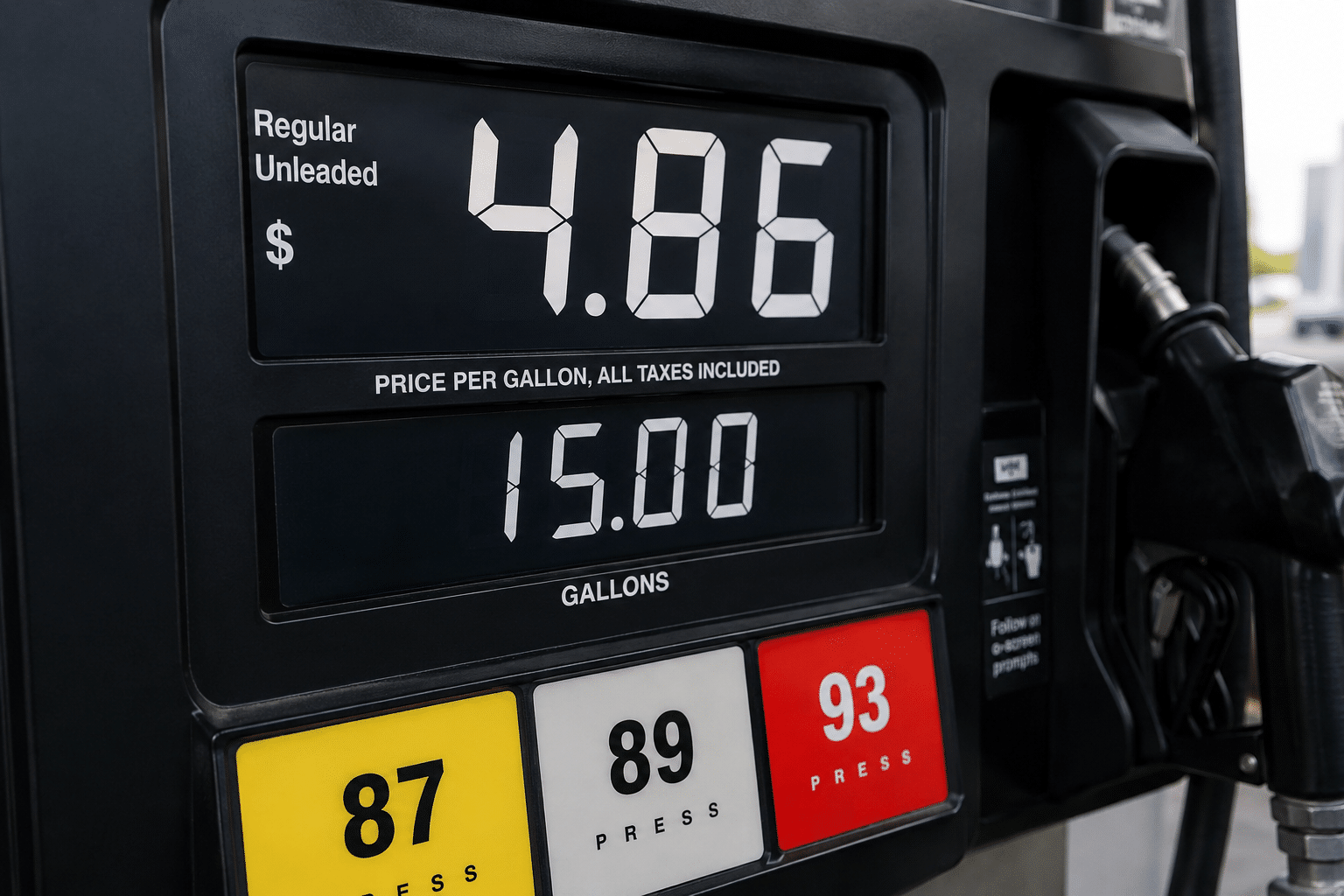
As gasoline prices approach $5 per gallon across Ohio, renewed calls for a temporary gas tax holiday are fueling debate over whether drivers could soon get relief at the pump.
Ohio’s average gas price recently climbed to approximately $4.86 per gallon, placing the state among the 15 most expensive in the nation for fuel, according to AAA.
Ohio motorists currently pay a 38.5-cent-per-gallon state gasoline tax, in addition to the federal gas tax of 18.4 cents per gallon. Combined, drivers pay nearly 57 cents per gallon in fuel taxes before additional market costs are factored into pump prices.
President Donald Trump has publicly voiced support for suspending the federal gas tax temporarily as fuel prices continue climbing nationwide, calling for a federal “gas tax holiday” to ease financial strain on consumers.
If approved, a suspension of the federal tax alone would save drivers 18.4 cents per gallon.
For the average driver filling a 15-gallon tank, that would amount to a savings of about $2.76 per stop.
Some Ohio lawmakers are also pushing for relief at the state level.
State Rep. Ty Mathews has proposed a temporary suspension of Ohio’s gasoline tax for approximately three months, which would add another 38.5 cents per gallon in potential savings.
If both the federal and state gas taxes were paused simultaneously, Ohio drivers could save nearly 57 cents per gallon — or about $8.50 on a 15-gallon fill-up.
Supporters argue the move would offer immediate relief to working families, especially rural Ohioans and commuters who travel long distances for work. Lower transportation costs could also help reduce prices for goods that rely on trucking and fuel distribution.
But opponents warn that gas tax revenue is a critical funding source for road maintenance, bridge repairs and transportation infrastructure.
Gov. Mike DeWine has already expressed opposition to suspending Ohio’s gas tax, citing concerns about the impact on transportation funding.
Critics also argue that oil companies or retailers may not fully pass the savings on to consumers, reducing the effectiveness of a tax holiday.
Any federal gas tax suspension would require approval from Congress. A pause in Ohio’s state fuel tax would require action by the Ohio General Assembly and the governor.
As gas prices remain elevated, pressure is mounting on elected leaders to determine whether short-term relief outweighs the long-term cost to infrastructure funding.