
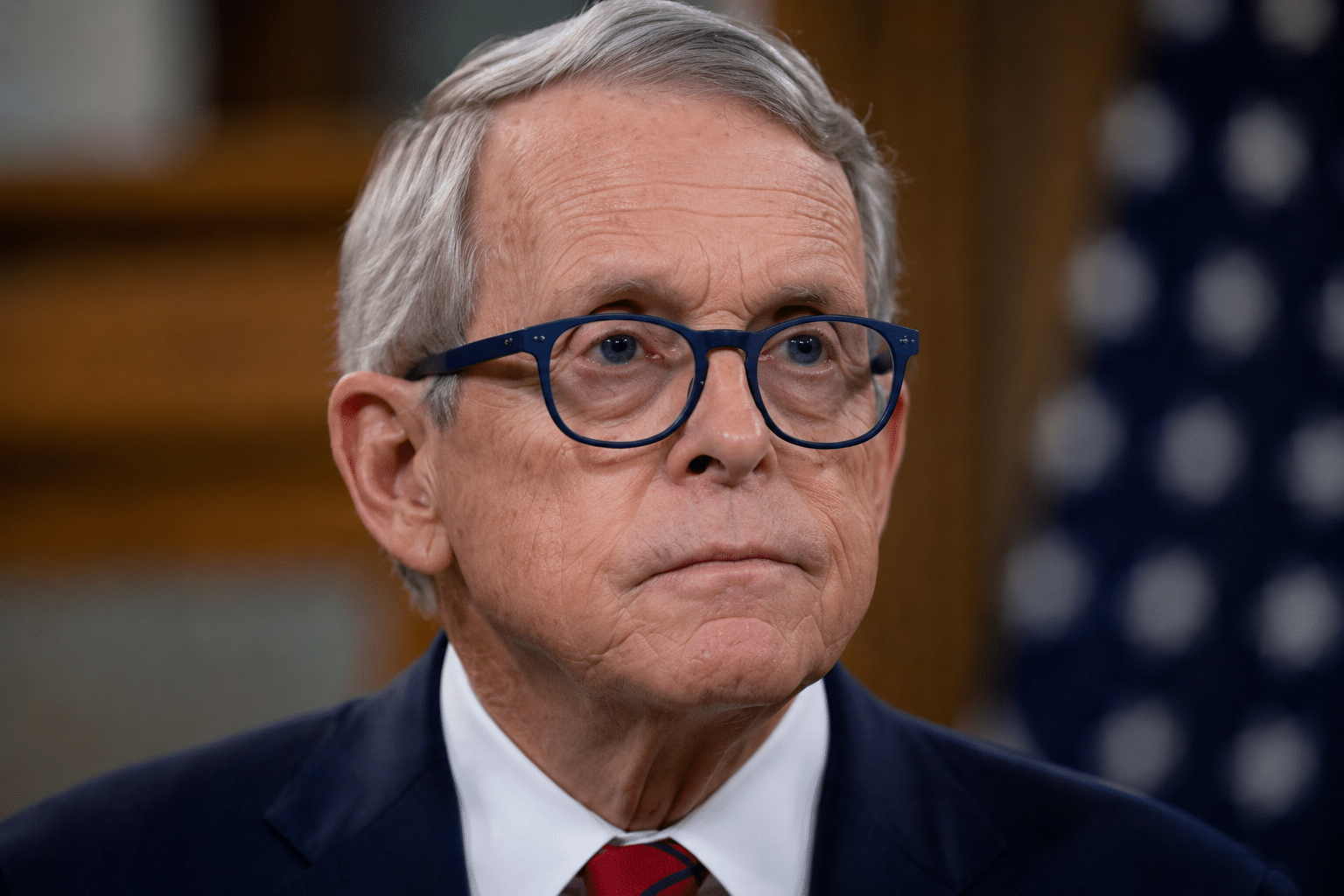
Ohio Gov. Mike DeWine said Tuesday that he now believes the state should eliminate the death penalty, marking a significant shift from a position he once championed as a legislator more than four decades ago.
Speaking during a news conference, the Republican governor said he no longer views capital punishment as an effective tool for preventing violent crime. DeWine cited federal and state data that he said shows the death penalty does not serve as a deterrent to murder.
“I no longer believe the death penalty is a deterrent to murder,” DeWine said. “I believe Ohio should abolish the death penalty.”
Despite the governor’s remarks, prospects for legislative action appear slim. Earlier this year, Ohio House Speaker Matt Huffman said he would strongly oppose efforts to repeal capital punishment, a position echoed by former Ohio Attorney General Dave Yost.
Ohio has not carried out an execution since July 2018, when Robert Van Hook was put to death for the 1985 killing of a man he met at a Cincinnati bar. Since taking office in 2019, DeWine has repeatedly postponed scheduled executions, creating a de facto moratorium on the practice.
The governor has attributed the delays to difficulties obtaining the drugs required for lethal injections, as pharmaceutical companies have declined to supply them. In 2025, President Donald Trump directed then-U.S. Attorney General Pam Bondi to assist states facing similar challenges. Yost later told Bondi that Ohio’s inability to secure execution drugs was unlikely to change without federal intervention.
DeWine has previously indicated that he does not expect any executions to take place before his term ends in 2026.
As a state senator, DeWine helped draft Ohio’s modern death penalty law, which reinstated capital punishment in 1981 after the U.S. Supreme Court struck down existing death penalty statutes nationwide in 1972. Although the law was enacted in the early 1980s, Ohio did not resume executions until 1999. Since then, 56 inmates have been executed by lethal injection.
The governor’s stance has evolved gradually during a political career spanning nearly five decades. Shortly after entering office, he directed state officials to explore alternative drugs for executions. By 2020, he said lawmakers would likely need to adopt a different execution method before any future death sentences could be carried out.
Efforts in recent years to either abolish the death penalty or authorize executions using nitrogen gas have failed to gain traction in the Ohio General Assembly.
DeWine has previously questioned whether capital punishment fulfills what he described as its primary moral justification: deterring future crimes. On Tuesday, he said he no longer believes the evidence supports that argument.
Meanwhile, Ohio continues to maintain a death row population and has 30 executions scheduled over the next four years, according to the Ohio Department of Rehabilitation and Correction.
Ohio is not alone in reconsidering capital punishment. Several states have ended the practice in recent years, including New Hampshire in 2019, Colorado in 2020 and Virginia in 2021. Other governors, including those in Pennsylvania and Oregon, have taken steps to halt executions or reduce death row populations.