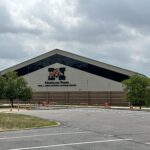

Facing declining enrollment and rising costs, the Claymont City School District Board of Education has approved a plan to consolidate schools, including the closure of Claymont Intermediate School at the end of the 2025–26 school year.
The decision came during a special board meeting Tuesday night following an executive session.
Board President Soloman Peters said the consolidation is driven primarily by declining enrollment and rising operational costs across the district.
“Our enrollment numbers are low, with buildings operating between 47% and 65% capacity,” Peters said. “It’s just not financially feasible to continue operating five buildings at those levels.”
Claymont Intermediate School, which currently houses students in grades three through five, will be closed under the plan. Peters said the building has required significant unexpected maintenance in recent years, with roughly 75% of its expenses classified as unplanned.
Closing the building is expected to significantly reduce capital expenditures. Peters said the district’s projected five-year capital improvement costs would drop from about $9 million to around $6 million.
Under the new configuration, fourth- and fifth-grade students will move to the district’s middle school, while third-grade students will attend Claymont Elementary School on Trenton Avenue. Eighth-grade students will transition to the high school.
The reorganization will reduce the district from five school buildings to four.
Peters said the board is also considering additional long-term consolidation, which could eventually bring the district down to three buildings if financial conditions allow. That plan would involve expanding the high school to accommodate grades six through 12.
“We’d like to add onto the high school and make it a six-through-12 building,” Peters said. “But we’re not comfortable making that commitment until we have more certainty about property taxes and future funding.”
The district’s current configuration dates back to a reorganization around 2019 or 2020, when multiple elementary buildings were restructured.
Peters also noted that the board is attempting to stay ahead of potential state mandates, including House Bill 311, which could require districts with low enrollment to consolidate.
“We’re trying to be proactive rather than reactive,” he said.
District officials said the changes are intended to improve efficiency while maintaining educational quality for students across the district.